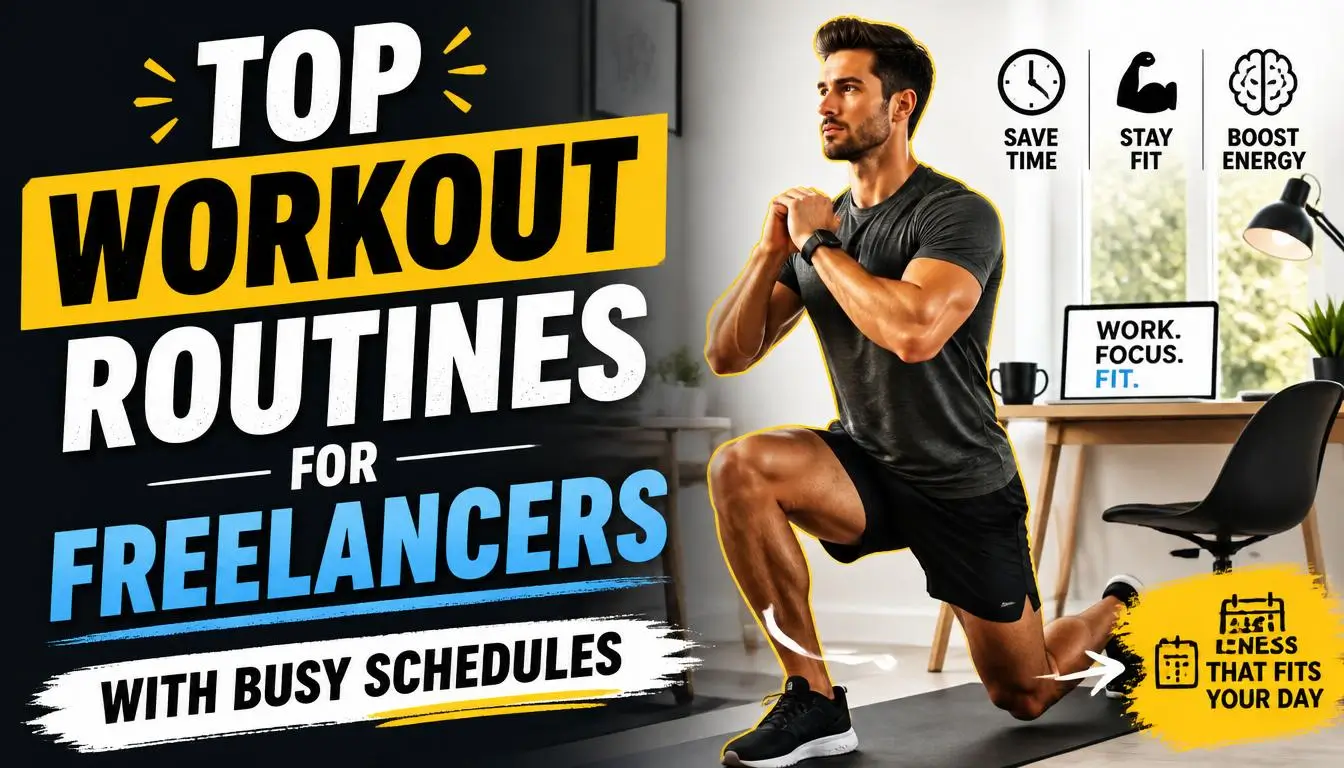

Finding simple workout plans for busy professionals short on time felt impossible when I was working 60-hour weeks and barely sleeping. I’d buy gym memberships, download apps, pin routines on Pinterest, and then never follow through. The plans always demanded too much. Too many days, too many exercises, too much equipment. It took me three years of failing before I figured out what actually sticks when your calendar looks like a war zone.
Why Most Workout Plans Fail Busy People
The fitness industry sells programs built for people who already have time. Four days a week, 60-minute sessions, separate upper and lower splits. That works great if your biggest daily decision is choosing between the squat rack and the leg press. For the rest of us? Those plans collect dust.
I tried following a popular PPL (push, pull, legs) split from Reddit while managing a team and traveling biweekly for client meetings. I made it eleven days before I missed three sessions in a row, felt guilty, and quit entirely. The problem wasn’t motivation. The problem was that the plan didn’t fit my life. A workout plan only works if you can actually do it consistently, and consistency beats perfection every single time.
The shift happened when I stopped asking “what’s the best routine?” and started asking “what’s the shortest routine I’ll actually do five out of seven days?” That single question changed everything for me.
The 20-Minute Full Body Plan That Changed My Mornings
This is the routine I’ve done more consistently than anything else in the past two years. It takes 20 minutes, requires zero equipment, and I do it in my living room before my first coffee.
Here’s the structure: five exercises, 40 seconds of work, 20 seconds of rest, repeated for four rounds. That’s it. The exercises rotate weekly, but a typical day looks like this: bodyweight squats, push-ups, reverse lunges, plank shoulder taps, and glute bridges. I set a timer on my phone using the Tabata Timer app, press start, and go.
Why does this work so well? Because it removes every barrier. No gym commute, no complicated equipment setup, no “I only have 15 minutes so it’s not worth it” excuses. Twenty minutes is short enough that your brain can’t negotiate its way out of it. I’ve done this routine in hotel rooms, in my parents’ basement during holidays, and once in a conference room before a 7 AM meeting. Nobody needs to know about that last one.
The key is choosing compound movements that hit multiple muscle groups. You’re not isolating your rear delts here. You’re getting your heart rate up and working your whole body in one shot.
Simple Workout Plans for Busy Professionals: The 3-Day Split
If you can commit to three days a week, you can build real strength with minimal time. I landed on a three-day split after trying dozens of configurations, and this one has the best effort-to-results ratio I’ve experienced.
Day 1: Push (chest, shoulders, triceps)
Dumbbell bench press, overhead press, tricep dips. Three sets each, 8 to 12 reps. Takes about 25 minutes.
Day 2: Pull (back, biceps)
Dumbbell rows, face pulls with a band, bicep curls. Same structure. Same timeframe.
Day 3: Legs and Core
Goblet squats, Romanian deadlifts, hanging leg raises or ab rollouts. Thirty minutes if you take your time.
I do Monday, Wednesday, and Friday. Sometimes it shifts to Tuesday, Thursday, and Saturday. The schedule doesn’t matter as long as you get three sessions in. I keep a pair of adjustable dumbbells from Bowflex at home, and they cover every exercise on this list. Best $300 I’ve spent on fitness, honestly.
The beauty of three days is that you get proper recovery between sessions. When I was running five or six days a week, I was constantly sore, constantly tired, and my performance at work suffered. Three days keeps me sharp at my desk and still moving the needle physically.
The Lunch Break Workout That Nobody Talks About
Most people waste their lunch break scrolling their phone anyway. I started using 30 minutes of my lunch for movement, and it became the most productive habit shift of my career.
Here’s what a typical lunch workout looks like for me: I keep resistance bands and a jump rope in my desk drawer. I find an empty conference room or step outside if the weather cooperates. Ten minutes of jump rope intervals (30 seconds on, 30 seconds off), followed by three supersets of banded rows paired with banded push-ups. Cool down with a two-minute walk, splash water on my face, and I’m back at my desk feeling like a completely different person.
The afternoon energy crash that used to hit me around 2 PM? Gone. I genuinely think midday movement does more for my productivity than any nootropic or extra cup of coffee ever could. My focus sharpens, my mood lifts, and I handle afternoon meetings without wanting to crawl under my desk.
If your office doesn’t have shower facilities, keep baby wipes and a fresh shirt in your bag. Problem solved. You don’t need to do a full CrossFit WOD at lunch. Just move enough to break a light sweat and reset your brain.
The Weekend Warrior Approach (and Why It Actually Works)
Some weeks are just brutal. Back-to-back meetings from 8 to 6, kids’ activities in the evening, deadlines that eat into your sleep. During those weeks, I give myself permission to do just two longer sessions on Saturday and Sunday.
Research from 2023 published in JAMA Internal Medicine actually supports this. “Weekend warriors” who concentrated their exercise into one or two sessions per week saw similar health benefits to people who spread workouts across the week. That study was a huge relief for me during my busiest quarters.
My weekend sessions run about 40 to 45 minutes. I usually do a full-body circuit on Saturday and a long walk or hike on Sunday. The Saturday circuit includes barbell squats, bench press, bent-over rows, and farmer carries. I keep rest periods short (60 seconds) to stay time-efficient. Sunday is purely about getting outside and moving at a pace where I can hold a conversation.
Is this optimal for building maximum muscle? No. But it keeps me consistent, which matters infinitely more than perfection spread across a program I’ll abandon in two weeks.
The Two Habits That Make Short Workouts Stick
You can have the best simple workout plan in the world, and it will still fail without two critical habits. I learned both the hard way.
Habit one: Lay out your workout clothes the night before. This sounds painfully basic. It is. But on mornings when my alarm goes off at 5:45 and my brain is screaming at me to stay in bed, seeing my shorts and shoes already set out on the floor creates just enough momentum to get me moving. The friction of finding clean workout clothes in a dark closet at 5:45 AM is enough to kill a workout before it starts. Remove that friction entirely.
Habit two: Track your workouts somewhere visible. I use a simple wall calendar in my home office with a red X for every day I train. Jerry Seinfeld popularized this “don’t break the chain” method, and it works because nobody wants to see a gap in their streak. I’ve also used the Strong app for logging sets and reps, which adds another layer of accountability. Seeing my numbers go up week over week keeps me hooked even when motivation dips.
These two habits cost nothing. They take less than five minutes combined. And they’ve done more for my consistency than any expensive trainer or fancy program.
Mistakes I Made So You Don’t Have To
I spent years overcomplicating my fitness. Here are the biggest mistakes that cost me time and results.
Trying to follow influencer routines was a disaster. Their programs are built for people who train for a living. You are not that person. Neither am I. Copying a 90-minute program from someone whose entire job is looking good on camera set me up for failure repeatedly.
Skipping warm-ups seemed like a time-saver until I tweaked my lower back doing cold deadlifts before a client presentation. Now I spend three minutes doing cat-cows, leg swings, and arm circles before every session. Three minutes of warm-up saves you weeks of recovery from a preventable injury.
Going too hard too fast was another classic blunder. The first week of a new plan, I’d go all out, leave everything on the floor, then be so sore I couldn’t sit on a toilet for three days. Start lighter than you think you should. Your ego can handle it.
How to Pick the Right Plan for Your Schedule
Not every plan fits every schedule, and that’s fine. Here’s how I think about choosing.
If you have 20 minutes daily, go with the full-body morning routine I described above. It’s the lowest barrier to entry, and daily movement builds a strong habit foundation fast.
If you can carve out three dedicated sessions of 25 to 30 minutes, the three-day split gives you better strength results and more recovery time between sessions.
If your weekdays are completely unpredictable but your weekends are yours, the weekend warrior approach keeps you in the game without stressing about missed weekday sessions.
Mix and match as your schedule shifts. Some months I run the three-day split religiously. Other months, I’m doing 20-minute bodyweight sessions in hotel rooms four days a week. The ability to adapt your approach based on your current reality is what separates people who stay fit long-term from people who yo-yo between all-in and completely off.
FAQs
Can I build muscle with simple workout plans for busy professionals?
Absolutely. You won’t look like a bodybuilder, but you can build meaningful muscle with three sessions per week using progressive overload. Increase weight or reps each week, even by small amounts. Consistency over months matters far more than session length. I’ve added noticeable muscle using just 25-minute sessions with adjustable dumbbells at home.
How many days per week should a busy person work out?
Three days is the sweet spot for most people balancing demanding careers. Two days still provides health benefits according to recent research. Even one day beats zero. The “right” number is whatever you can sustain for months without burning out or resenting your schedule. Start with two and add a day if it feels manageable.
Do I need gym equipment for short workouts?
Not at all. Bodyweight exercises like push-ups, squats, lunges, and planks can build a solid fitness foundation. That said, a set of resistance bands (around $20) and adjustable dumbbells dramatically expand your options. I went equipment-free for six months before investing in home gear, and both phases produced real results.
What’s the best time of day to work out with a busy schedule?
Morning works best for most professionals because it’s the time slot least likely to get hijacked by work emergencies. But the best time is genuinely whatever time you’ll actually show up. I’ve trained at 5:30 AM, during lunch, and at 9 PM. All three worked. The one I stuck with longest was mornings because nothing competes with that slot.
Is 20 minutes of exercise really enough to see results?
Yes, if the intensity is appropriate. Twenty minutes of focused compound movements at a challenging effort level beats 60 minutes of wandering around a gym checking your phone between sets. Studies consistently show that shorter, higher-intensity sessions produce comparable cardiovascular and strength benefits to longer moderate sessions. I’m living proof.
Conclusion
Staying fit with a packed schedule isn’t about finding more time. It’s about using the time you already have with a plan that respects your reality. Start with the shortest routine you’ll actually do, build the habit, and expand from there. What’s the one workout format from this list that fits your week right now?