Finding no-fail fitness routines for remote workers at home felt impossible when I first ditched the office commute three years ago. I gained 15 pounds in six months. My back screamed by 3 PM every single day. Sound familiar? The thing is, I wasn’t lazy. I just didn’t have a system that worked around my actual schedule, my tiny apartment, and my complete lack of motivation after eight hours on Zoom.
Why Most Home Workout Plans Fail Remote Workers
Here’s the real problem. Most fitness plans assume you have a predictable schedule, a dedicated workout space, and leftover energy after work. Remote workers have none of that. Your “commute” is twelve steps from bed to desk. Meetings pop up randomly. And by 5 PM, the couch is right there whispering sweet nothings.
I tried following generic YouTube workout calendars. Twice. Both times I quit within two weeks because a client call would land right on my workout slot, and once I skipped one day, the whole thing collapsed. The routines that actually stuck for me shared three things in common: they were short, they required zero equipment, and they attached to habits I already had. That last part is the secret sauce. You don’t need more discipline. You need smarter triggers built into your existing workday.
Build a Movement Anchor Into Your Morning
Forget waking up at 5 AM to crush a brutal HIIT session. That works for some people. I am not some people, and you probably aren’t either. Instead, I anchored a 10-minute bodyweight routine to the moment right after I make my coffee. Coffee brews, I move. That’s the rule.
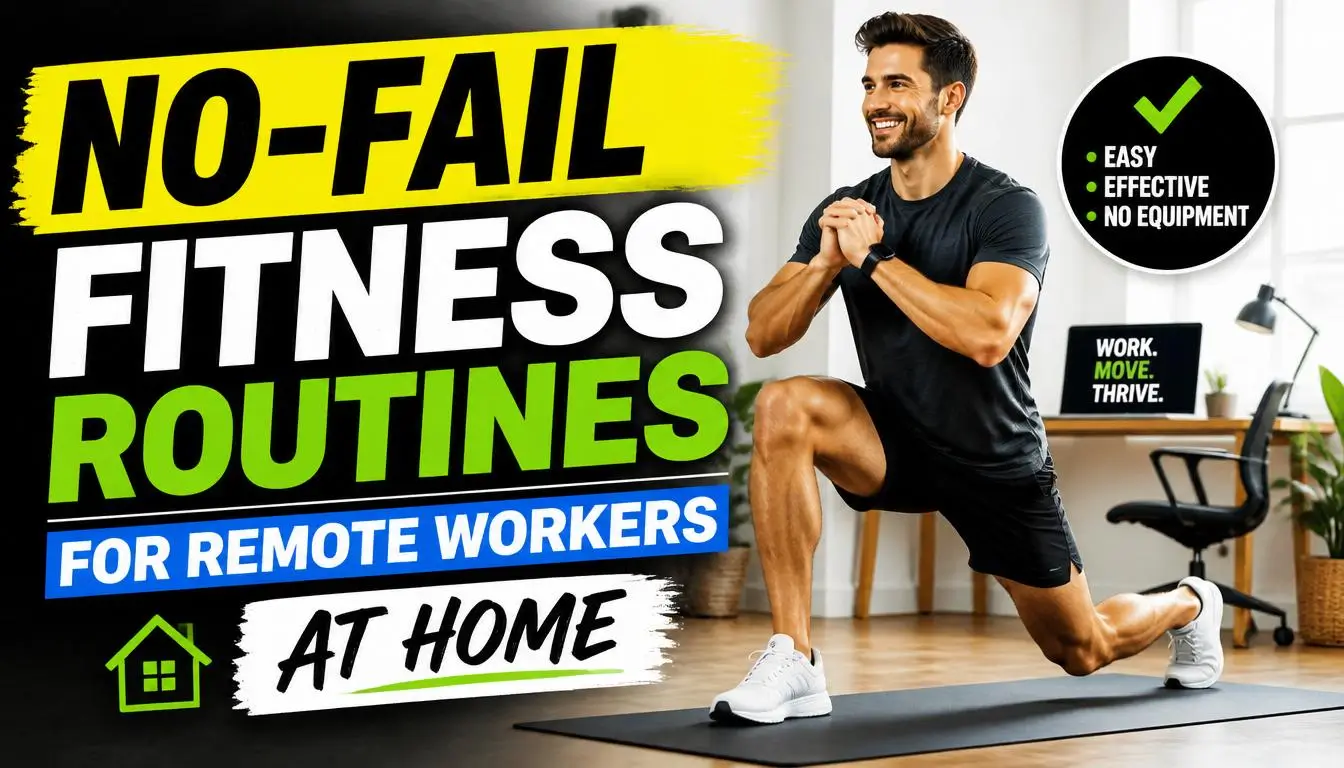
My morning anchor workout looks like this: 20 squats, 10 push-ups (knee push-ups count, don’t let anyone tell you otherwise), a 30-second plank, and 10 reverse lunges per leg. The whole thing takes about 8 minutes. I do it in my pajamas on the kitchen floor. It’s not glamorous. But I’ve done it almost every weekday for over two years because it’s tied to something I’d never skip: caffeine.
The key is picking a trigger you already do without thinking. It could be right after brushing your teeth, right after your first glass of water, or right after you shut off your alarm. Consistency beats intensity every time at this stage.
The Micro-Workout Strategy That Actually Works
This one changed everything for me. Instead of carving out a 45-minute block that inevitably gets hijacked by Slack messages, I break movement into micro-workouts scattered across the day. Five minutes here, three minutes there. It adds up fast.
Between meetings, I’ll knock out 15 push-ups. During a long compile or file upload, I’ll do wall sits until it finishes. Before lunch, I do a quick set of jumping jacks and stretches. None of these feel like “working out.” They feel like shaking off the screen fog. And research from the British Journal of Sports Medicine backs this up, showing that short exercise bursts throughout the day produce similar cardiovascular benefits to one longer session.
I use a simple Pomodoro timer app called Forest. Every 25-minute work sprint ends with a 5-minute break, and at least two of those breaks per day become movement breaks. No excuses, no gear, no changing clothes. Just move for a few minutes and sit back down.
No-Fail Fitness Routines for Remote Workers: The Lunch Split
Your lunch break is prime real estate. Most remote workers eat at their desk and scroll their phone. I used to do exactly that. Now I split my lunch hour into two halves: 30 minutes to eat (away from the desk, please), and 20 to 25 minutes for an actual workout.
This is where I bring in slightly more structured routines. Three days a week, I follow along with a YouTube workout from channels like Caroline Girvan, Sydney Cummings, or Fitness Blender. These creators offer free workouts ranging from 15 to 30 minutes, and they don’t require equipment unless you want it. A pair of 15-pound dumbbells from Amazon was my only purchase, and honestly, I didn’t buy those until month four.
On the other two weekdays, I go for a walk. Not a power walk. Not a ruck. Just a normal, phone-in-pocket, look-at-trees walk for 20 minutes. Walking is wildly underrated as exercise, and it does something for afternoon focus that no amount of coffee can replicate. I come back to my desk sharper every single time.
Set Up a Stupid-Simple Home Workout Space
You don’t need a home gym. You don’t even need a yoga mat, though I’d recommend one because hardwood floors and your knees aren’t friends. My “gym” is a 4×6 foot area between my couch and coffee table. I push the coffee table aside, roll out my mat, and that’s it.
Having a designated spot matters more than having equipment. When I see that corner, my brain associates it with movement. It’s a visual cue that reinforces the habit. If you have to dig a mat out of a closet, clear a bunch of stuff off the floor, and find your dumbbells under the bed, you’ve already created three friction points that make skipping easier than starting.
Here’s my full equipment list after three years: one yoga mat (I like the Gaiam essentials thick mat), one set of adjustable dumbbells, and one resistance band. Total investment was under $80. Everything else, the squats, the push-ups, the lunges, the planks, uses my own bodyweight and costs exactly nothing.
Accountability Without a Gym Buddy
Working out alone at home can feel isolating, and isolation kills motivation. I solved this two ways. First, I joined a free Discord community for home fitness (the r/bodyweightfitness Reddit community links to several good ones). Posting a quick “did my workout” message each day sounds silly, but social accountability works even in small doses.
Second, I track everything in a plain notebook. Not an app. A physical notebook on my desk. Each day I write the date and what I did. Seeing a streak of checkmarks builds its own momentum. When I missed a day last month, that blank space bugged me enough to make sure I showed up the next morning. Simple psychology, but it works.
If you prefer apps, the one that clicked for me was Streaks on iOS. It lets you set daily goals and tracks your chain. Breaking a 30-day streak feels genuinely painful, which is exactly the point.
Stretch and Decompress at the End of the Day
Nobody talks about this enough. Remote workers sit in terrible positions for eight-plus hours, and jumping straight into intense workouts without addressing that tightness is how you end up with a tweaked back or angry hip flexors. Trust me, I learned this the hard way during month two.
Every evening after I close my laptop, I do a 10-minute stretching routine. I follow a YouTube video from Yoga With Adriene called “Yoga for Desk Workers” that I’ve probably done 200 times at this point. It targets the hip flexors, shoulders, neck, and lower back, basically everything that gets wrecked from sitting all day.
This isn’t optional fluff. This is what keeps you able to do the actual workouts without pain. My lower back issues disappeared completely after about three weeks of consistent evening stretching. If you skip everything else on this list, keep this one.
How to Stay Consistent When Motivation Disappears
Motivation is a terrible long-term strategy. It shows up on Monday and ghosts you by Wednesday. What works instead is making your fitness routines so small and so embedded in your daily flow that skipping them feels weirder than doing them.
My rule: on days when I truly don’t want to work out, I commit to just two minutes. Two minutes of squats. Two minutes of stretching. That’s it. Most of the time, once I start, I keep going. But even when I don’t, those two minutes kept the habit alive. The chain didn’t break. And that matters more than any single workout ever could.
I also stopped punishing myself for missed days. One skipped workout doesn’t erase a month of consistency. Remote work already blurs enough boundaries. Don’t let fitness become another source of guilt. Show up when you can. Do what you can. Keep moving forward.
Frequently Asked Questions
What are the best no-fail fitness routines for remote workers with no equipment?
Bodyweight circuits work incredibly well. Combine squats, push-ups, planks, lunges, and jumping jacks into a 10 to 15 minute routine. Rotate exercises every 45 seconds with 15 seconds rest between them. I’ve done this exact format for years and it builds real strength and endurance without needing a single piece of gear.
How many minutes of exercise do remote workers actually need each day?
The WHO recommends 150 minutes of moderate activity per week, which breaks down to about 30 minutes on five days. But honestly, even 10 to 15 minutes daily makes a noticeable difference in energy, focus, and mood. Start small and build up. Perfection isn’t the goal, consistency is.
Can I work out effectively in a small apartment?
Absolutely. My workout space is smaller than a bathroom. Bodyweight exercises like squats, push-ups, and planks need almost no room. Skip jumping-heavy moves if you have downstairs neighbors and substitute high knees with controlled marching or silent burpees. You adapt and it works just fine.
How do I stop sitting so much while working from home?
Set a timer for every 25 to 30 minutes and stand up during breaks. Get a simple standing desk converter if your budget allows, the FlexiSpot models are solid and affordable. Walk during phone calls. Take your lunch away from your desk. Small interruptions to sitting add up to a massive difference over weeks.
What time of day is best for home workouts as a remote worker?
There’s no universally perfect time. Morning works if you anchor it to a habit like coffee. Lunchtime works if you protect that block on your calendar. The best time is whichever slot you’ll actually use consistently. I split mine between a morning micro-session and a lunchtime workout, and that combo has been bulletproof for me.
Conclusion
Remote work stole my movement without me even noticing, and building it back required small, stubborn habits instead of grand fitness plans. These routines work because they fit inside a real workday, not around some imaginary perfect schedule. What’s the one small movement habit you could attach to something you already do every day?